
Smarter and Faster Data Analysis
Data is the foundation of business analysis. In the past, Business Analysts spent a large portion of their time cleaning datasets, organizing spreadsheets, and manually identifying trends. This process was slow and often exhausting.
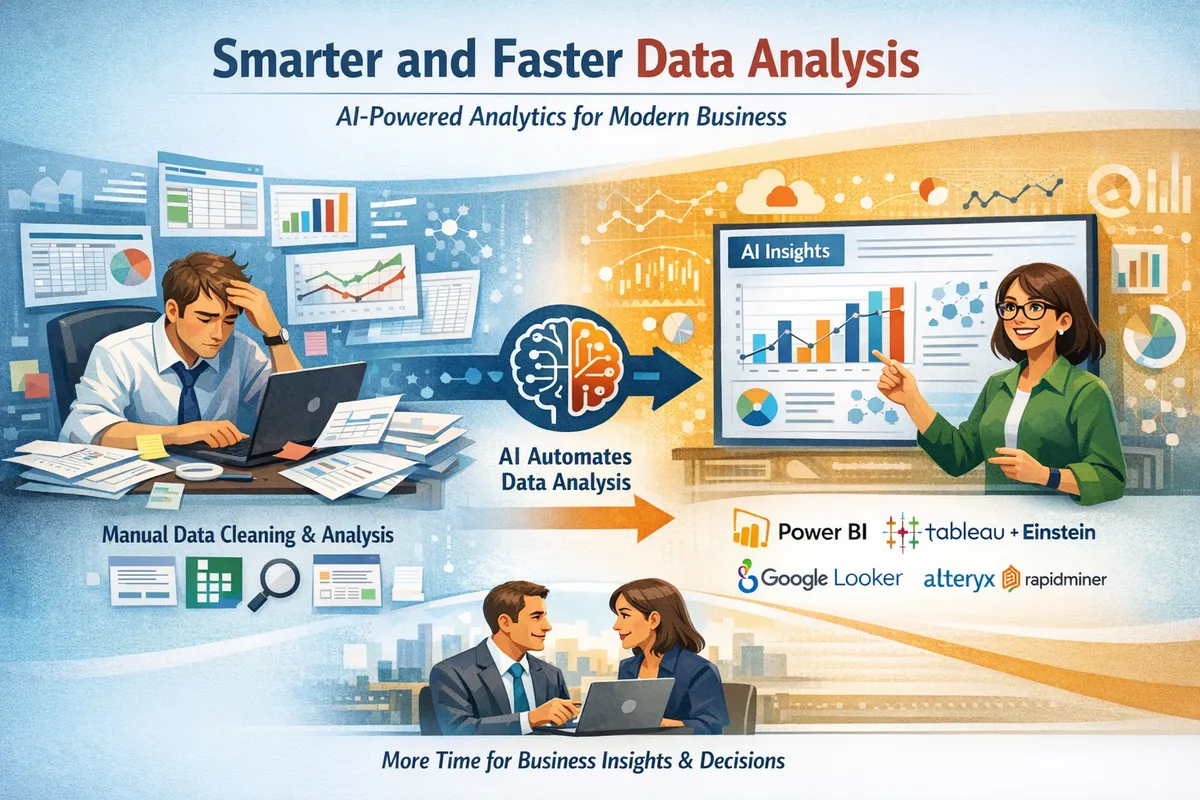
AI powered analytics tools now automate much of this work. Tools such as Microsoft Power BI with AI visuals, Tableau with Einstein Discovery, and Google Looker use machine learning to automatically detect trends, outliers, and patterns in data. Platforms like Alteryx and RapidMiner also help automate data preparation and advanced analytics without heavy coding. This allows Business Analysts to spend less time preparing data and more time interpreting insights that influence business decisions.
Predictive Insights and Forecasting
AI enables Business Analysts to move beyond reporting past performance and into forecasting future outcomes. Predictive analytics tools analyze historical data and generate forecasts that support better planning. Tools such as IBM Watson Analytics, SAS Forecasting, and Azure Machine Learning allow Business Analysts to build models that predict customer behavior, sales trends, and operational risks. Even spreadsheet tools like Excel now include AI-powered forecasting features that make predictive analysis more accessible with these tools. Business Analysts can help organizations anticipate demand, reduce risks, and make proactive decisions rather than reactive ones.
Improved Requirements Gathering
Requirements gathering is one of the most important responsibilities of a Business Analyst. It involves understanding stakeholder needs and documenting them clearly. AI is making this process more efficient and accurate. Meeting intelligence tools like Otter.ai and Microsoft Copilot can transcribe meetings and summarize key discussion points. Natural language processing tools can extract action items and highlight decisions from long conversations. Documentation assistants such as Notion AI and Confluence AI help Business Analysts organize and refine requirements into structured documents. These tools reduce manual note-taking and minimize the chances of missing important information, resulting in clearer and more complete requirement documentation.
Better Communication with Stakeholders
Business Analysts must communicate complex ideas in ways that both technical and non-technical stakeholders can understand. AI helps transform raw data into clear insights and professional reports. Tools like ChatGPT, Microsoft Copilot, and Google Gemini can assist in drafting reports, summarizing findings, and simplifying technical explanations. Visualization platforms such as Power BI and Tableau use AI features to automatically generate charts and narrative summaries that explain trends in plain language. This improves clarity, speeds up report preparation, and helps Business Analysts focus more on discussion and decision-making rather than formatting documents.
Process Optimization and Automation Opportunities
Analyzing and improving business processes is a core part of the Business Analyst role. AI-powered process mining and automation tools provide deeper visibility into how processes actually work. Tools such as Celonis and UiPath Process Mining use AI to analyze system logs and identify inefficiencies, delays, and bottlenecks. Business Analysts can use these insights to recommend process improvements and automation opportunities. Robotic Process Automation tools like Automation Anywhere and UiPath also help implement solutions for repetitive manual tasks. This makes Business Analysts key contributors to operational efficiency and digital transformation initiatives.
Stronger Decision Support
AI enhances decision support by enabling data-driven comparisons between different business scenarios. Business Analysts can evaluate potential outcomes and risks before decisions are made. Decision intelligence platforms such as Palantir Foundry and SAP Analytics Cloud use AI to simulate business scenarios and provide recommendations. Business Analysts can use these tools to support leadership with evidence-based insights that strengthen strategic planning. This elevates the Business Analyst from a support role to a trusted advisor who influences important business decisions.
More Time for Strategic and Creative Work
AI automates many routine tasks such as report formatting, basic analysis, and data organization. This frees up time for Business Analysts to focus on work that requires creativity and critical thinking.
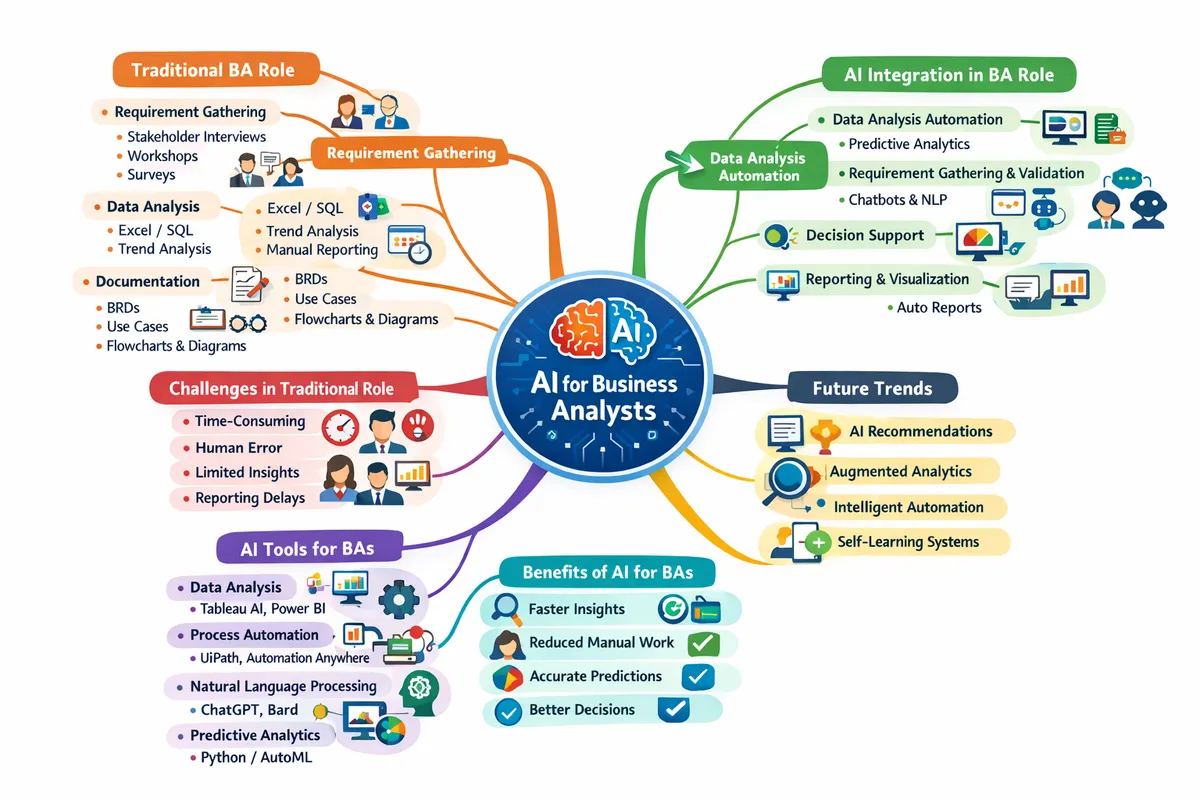
They can spend more time identifying innovative solutions, improving stakeholder relationships, and aligning projects with long-term business strategy. AI becomes a productivity partner that handles repetitive work while the Business Analyst focuses on value creation.
The Human Element Still Matters
Despite the rise of AI, human skills remain essential. Business Analysts often manage conflicting stakeholder expectations, handle sensitive business issues, and make judgments in situations where data alone is not enough. Empathy, negotiation skills, ethical decision-making, and deep understanding of business context cannot be replaced by machines. The most successful Business Analysts will be those who combine strong interpersonal skills with the ability to use AI tools effectively.
Conclusion
Artificial Intelligence is transforming the Business Analyst role into a more strategic, efficient, and insight-driven profession. By automating routine tasks and enhancing analytical capabilities, AI allows Business Analysts to deliver deeper insights and support smarter decisions. Rather than replacing Business Analysts, AI is empowering them. Those who embrace AI tools such as Power BI, Tableau, ChatGPT, Copilot, Celonis, and predictive analytics platforms will be better equipped to lead change and add meaningful value in a data-driven business world.The future of business analysis lies in the collaboration between human intelligence and artificial intelligence.